A prophecy that doesn’t come true is gibberish from the past.
Along with other books, I am currently reading Exhalation by Ted Chiang. To put it loosely, it is a collection of science fiction short stories that also underscore the meaning of being human. In the story that I am reading presently, a corporation creates virtual reality pets and sells them to people who can train these pets to assimilate into their own unique home environment. Exhalation is a celebrated work of science fiction, but reading this particular story makes me disenchanted and morose. It makes me want to take a one-way ticket to my mother’s village, where our disputed ancestral house is unkempt, ugly, and unlived in, and urges me to spend the rest of my life trying to put it back brick by brick, because I have had enough of technology trying to be up in my life in every single way. No thank you very much.
With the way technological corporate slaves are trying to advance, I would not be surprised if there’s a group of us who decide to turn the other way, go back to living hermit lives, and take to agriculture or slow village-living with a vengeance. At least, I know I am being driven to that point. I saw a reel of AI glasses that can observe everything in my surroundings and respond to questions I may ask. Then, while writing this blog post, it took me 30 seconds to come up with the word ‘disputed’ in the first paragraph. I knew the word, but I had to stop typing and search the living room of my brain for where I had placed ‘disputed’. They say that if we keep letting technology think for us, we will stop thinking for ourselves. Our brains, after all, are a muscle too.
My parents often talk about their childhoods, as old people usually do, and they observe how much of the world has changed since the Internet. How their own lives and their conception of the world has changed. In fact, this blog, started in 2009 was a fledgling attempt at being a part of the world wide web. I am able to recall how everyone would say that the Internet would bring us closer. Glocalisation, they called it. As things stand today, the opposite has happened. Today, writing long-form is an older cousin who owns cassettes and has vintage books stowed away, but makes for a good conversation with the present generation only once in a while. All of us have been trained to keep chasing a 10 second-high.
This is why I started reading 100 year old literature two years ago, and why I am trying to re-fashion my relationship with writing. I don’t want to keep up with the technological insanity. I want to slow down. It’s not that I don’t love technology, I do. I love the fact that I can book a plane ticket and download Google maps of a foreign country, the fact that it can aid my living experience. I dislike the fact that most people in tech have no acumen for nuance, no understanding of the social sciences, and no perception of the world outside their privilege. I dislike the fact that they want to make tech the core centre of our lives rather than keeping it as the aid that it was supposed to be.
Most people in tech are like Manchester United fans. They have co-opted into their club’s genius so much that they are unable to believe they can personally lose at any endeavour or require personality development themselves. Of course, there are rare exceptions, but this is the general rule. I like technology for what is possible, but I believe that the possibilities have arrived at a fork in the road where they need to choose between building for humanity or building despite humanity. I fear they’re choosing the latter.
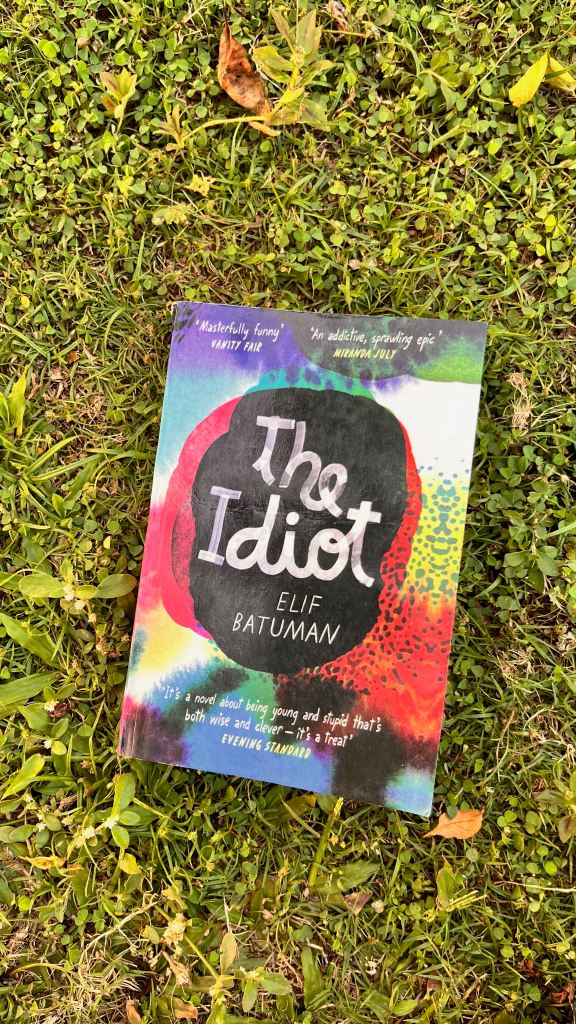
So when these virtual pets in Ted Chiang’s short story The Lifecycle of Software Products were being trained by their human owners, I was put off by it and what it represented. Instead, I picked up a 139 year old novel by Leo Tolstoy, which also happens to be my first Tolstoy ever. The Death of Ivan Ilyich was recommended by someone on a sub-reddit and picked up by me, an unsuspecting lurker. The name stood out because another book I am reading, The Idiot by Elif Batuman, has an Ivan in it, too. The main character of The Idiot, Selin, attends a Russian language class in Harvard and her class is expected to choose Russian names for their interactions during the year. Selin’s Russian name is Sonya, and her friend who pairs up with her is called Ivan. Sonya and Ivan enact the roles of Nina and Ivan from a beginner’s Russian reading assigned to them. It’s all a bit much, but it’s a snowy, uncertain type of sombreness typical of white winters and Russian novels.
A recent piece in The Guardian addresses the phenomenon of tech overlords (notice use of the word overlord) using science fiction’s ideas, concepts, and even high-fantasy names for tech projects that are underway. The author of the opinion piece fears that these tech overlords might be misinterpreting science fiction to destroy the world (the author’s words not mine). Unfortunately, I have to agree. Imagine using names from The Lord of the Rings for your projects that have quarterly business goals to destroy human lives. Imagine being Tolkein who learnt languages, invented new ones, build high-fantasy worlds only to be referenced in the future to use AI for destruction of life, which he so clearly loved. No one who writes of two breakfasts hates living. It seems now that writers of fiction now must address world issues in their works rather than reflect on how we live is a whole another essay in itself. But this piece in the Guardian addresses a dangerous phenomenon in our world right now where tech has unchecked power.
So imagine my discomfort when I read a novella-sized short story in which people are training virtual pets. Truth be told, I haven’t read a lot of science fiction in my early reading years. Of course, I have read The Hitchhiker’s Guide to the Galaxy and loved Marvin the Paranoid Android, but my takeaway from the book is that humans are stupid and dolphins are the smartest of us all. This book did not make me want to put a highway through my neighbourhood. Maybe that’s the difference between readers and tech overlords who run capitalism on their pinky fingers. I started reading science fiction five years ago and I may not have enjoyed it as much, but it gave me, what they call, perspective. Now that I have formed an opinion, it is safe to say that it’s not a genre of reading I enjoy. There’s a reason I have a hardcover copy of Jane Eyre in my closet. I may be on a mission to heal my reading nervous system at this point.
I am certain that Ted Chiang will spin a humanistic perspective in the story at some point even if it isn’t the soul of the story, as he has done for the other stories that I’ve read in this collection so far. Chiang’s essay on AI where he asserts that AI won’t make art was incisive, original, and refreshing at the time it came out. I wish tech overlords could read. His essay is why I picked his book in the first place; I thought he had a different take on tech in fiction. So far, I have no judgement, I will keep an open mind.
The fact that ChatGPT can generate coherent sentences invites us to imagine that it understands language in a way that your phone’s auto-complete does not, but it has no more intention to communicate. It is very easy to get ChatGPT to emit a series of words such as “I am happy to see you.” There are many things we don’t understand about how large language models work, but one thing we can be sure of is that ChatGPT is not happy to see you. A dog can communicate that it is happy to see you, and so can a prelinguistic child, even though both lack the capability to use words. ChatGPT feels nothing and desires nothing, and this lack of intention is why ChatGPT is not actually using language. What makes the words “I’m happy to see you” a linguistic utterance is not that the sequence of text tokens that it is made up of are well formed; what makes it a linguistic utterance is the intention to communicate something. Because language comes so easily to us, it’s easy to forget that it lies on top of these other experiences of subjective feeling and of wanting to communicate that feeling.
Ted Chiang
I do have beef, though. My beef with tech is that it doesn’t have imagination. At the moment, it seems to drive headlong into its own success and is drunk on its own power. It makes people one-dimensional, both, those who work for it and those who use it, and it robs people of the capacity to do good in the world. I would much rather not have virtual reality pets in my short stories, but if that’s the way it is, I would much rather we don’t make this fiction accessible to tech overlords. What I want, though, is a way for us to tell stories about living despite this being our reality. This dopamine-crazed, button-tapping, and speaking-into-the-camera lives that we seem to be living should have more to it, shouldn’t it? And there should be more to the futures that we are imagining for ourselves.
Every time I imagine my future, I am surrounded by greenery so abundant it calms me down, the warmth of slow cooking over fire, the sound of water and laughter of friends, and books, always books.
 amarllyis
“It seems now that writers of fiction now must address world issues in their works rather than reflect on how we live…“
The worst thing that could happen to writing is removing the charm and in its place adding the need for exact relevance.
Why is it that the question “what does it do?” become so prominent? I had a friend ask me gow reading fiction helps you in the real world? I could’ve bitten his head off if it was acceptable.
I so understand that words that used to effortlessly slip off of our tongues now need to be coaxed and dragged out with a thesaurus or running a mental marathon. It puts me to shame. It happens even when I’m talking.
Lovely bit, amarllyis!
LikeLiked by 1 person