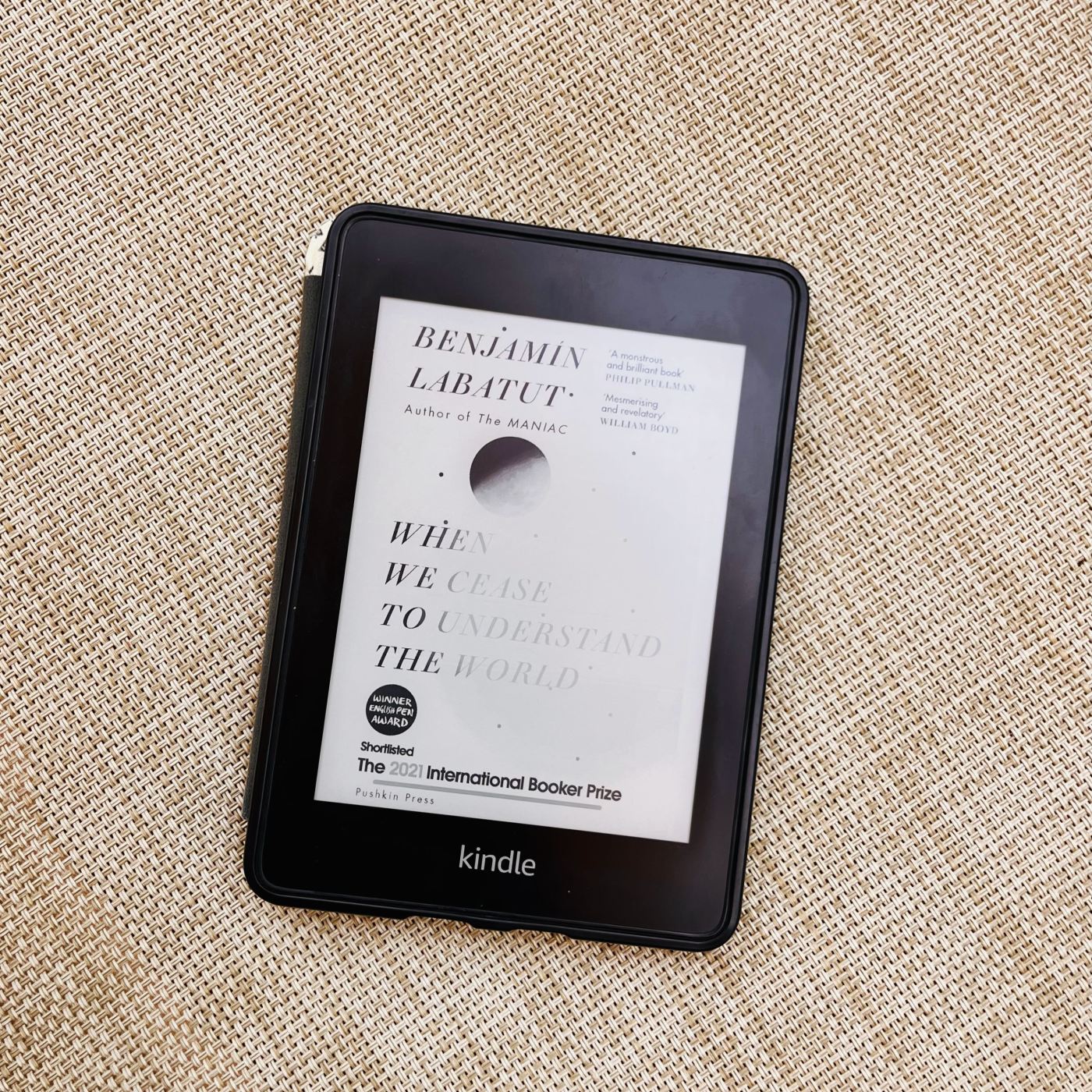
Book 3: When We Cease to Understand the World by Benjamin Labatut
I picked up this book because of many recommendations on Reddit and because the title describes the current situation of our planet. This is a fictionalised non-fiction book that paints a picture of the lives of eminent scientists (physicists, chemists, and biologists) who changed the course of humankind with their inventions and discoveries. When I started reading it, I was intrigued by the way the author described the “factual” events that led to the invention of the colour Prussian Blue. The storytelling was riveting, and i don’t use the word ‘riveting’ lightly like some sort of Instagram influencer. It is seriously good writing.
However, while reading about the book, I discovered that because this is fictionalised non-fiction, one had to separate the fact from the fiction, the emotions, and the relay of events in the book. It became very hard to tell what parts of it were real and what parts of it were fictionalised to make these scientists more human in the eyes of the casual reader. I did appreciate the terrors of the human mind ascribed to each scientist (except Einstein who had a benevolent hand above all of them) and how they were driven to madness while being drawn to their specialties. The story of how Grothendieck moved to a village in Europe after he made a mathematical discovery which frightened him was most peculiar and fascinating to me because it made human the pains of the mind.
Influenced by the clamour of the May ’68 protests all around him, he called on more than a hundred students during a masterclass at the University of Paris in Orsay to renounce “the vile and dangerous practice of mathematics” in light of the hazards humanity was facing. It was not politicians who would destroy the planet, he told them, but scientists like them who were “marching like sleepwalkers towards the apocalypse”. From that day forward, he refused to participate in any maths conference that would not allow him to devote equal time to ecology and pacifism. During his talks, he gave away apples and figs grown in his garden and warned about the destructive power of science: “The atoms that tore Hiroshima and Nagasaki apart were split not by the greasy fingers of a general, but by a group of physicists armed with a fistful of equations.”
Labatut, Benjamín. When We Cease to Understand the World: Shortlisted for the 2021 International Booker Prize (p. 75). (Function). Kindle Edition.
Overall, this book was a beautiful read because it felt like being in the company of some of the brilliant minds of our humanity. They were extraordinarily intelligent, delirious, conflicted, and moved our planet forward, all while suffering more than exhilarating.
🌟 4/5
 amarllyis